
Panel
Unknown Artist
17th century
Medium
Silk and metal thread
Dimensions
L. 101 1/2 x W. 23 inches (selvage to selvage) 257.8 x 58.4 cm
Classification
Textiles-Woven
Culture
Italian
Department
European Sculpture and Decorative Arts
Museum
Metropolitan Museum of Art, New York, NY
Credit
Rogers Fund and Director's Discretionary Fund, 1984
Accession Number
1984.301c
Rights
Public Domain
Art Historical Context
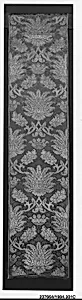
This exquisite 17th-century Italian textile panel, crafted from luxurious silk and metal threads, measures an impressive 101½ by 23 inches, making it a substantial piece likely intended for grand interiors or ecclesiastical settings. Housed in the Metropolitan Museum of Art's Department of European Sculpture and Decorative Arts, it exemplifies the pinnacle of Baroque-era textile artistry, where intricate weaving techniques transformed shimmering materials into opulent displays of wealth and skill. Italy, particularly regions like Venice and Florence, was a hub for silk production and advanced loom work during this period, fueled by trade routes from the East. The use of metal threads—often gold or silver lamé—added a reflective, jewel-like quality, catching light to dramatic effect. Such panels were prized for altar hangings, wall coverings, or nobility's garments, blending functionality with splendor and reflecting the era's fascination with ornamentation amid the Counter-Reformation's emphasis on visual magnificence. Though the artist remains unknown, this panel's survival speaks to the enduring legacy of Italian craftsmanship. Acquired through the Rogers Fund and Director's Discretionary Fund in 1984, it invites visitors to appreciate the tactile elegance of woven luxury, a testament to how textiles wove themselves into the fabric of 17th-century European culture.