
Panel
Unknown Artist
13th–14th century
Medium
Wood; carved, inlaid with ivory
Dimensions
Ht. 3 3/4 in. (9.5 cm) W. 7 5/16 in. (18.6 cm) D. 9/16 in. (1.5 cm)
Classification
Wood
Department
Islamic Art
Museum
Metropolitan Museum of Art, New York, NY
Credit
Rogers Fund, 1907
Accession Number
07.236.32
Rights
Public Domain
Art Historical Context
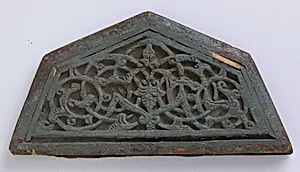
This delicate wooden panel, crafted by an unknown artist in the 13th–14th century, exemplifies masterful woodworking traditions of the medieval Islamic world. Measuring just 3¾ inches high and 7⅜ inches wide, its slim profile (⅝ inch deep) suggests it once adorned furniture, doors, or architectural elements in a palace, mosque, or wealthy home. Acquired by The Metropolitan Museum of Art through Rogers Fund in 190, it now graces the Islamic Art department, offering a glimpse into the era's opulent craftsmanship. The panel's medium—wood carved with precision and inlaid with ivory—highlights advanced techniques like intarsia and marquetry, where thin ivory pieces were meticulously fitted into recessed designs. Ivory inlays, prized for their luminous quality, added contrast and luxury, symbolizing status and piety. Such works flourished across regions like Egypt and Syria under Mamluk patronage, blending geometric patterns, arabesques, and epigraphy to evoke spiritual harmony without figurative representation. Though its exact motifs remain subtle in scale, this panel reflects the Islamic emphasis on infinite patterns mirroring divine order. Visitors, imagine running your fingers over its tactile surfaces— a testament to artisans whose skill turned humble wood into enduring beauty.