
Panel
Unknown Artist
late 16th or early 17th century
Medium
Silk; metal; cotton; hemp
Dimensions
125 1/2 x 22 in. (320 x 57.5 cm)
Classification
Textiles-Woven
Culture
Italian or Spanish
Department
Robert Lehman Collection
Museum
Metropolitan Museum of Art, New York, NY
Credit
Robert Lehman Collection, 1975
Accession Number
1975.1.1855
Rights
Public Domain
Art Historical Context
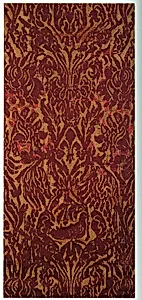
This magnificent woven textile panel, dating to the late 16 or early 17th, hails from either Italy or Spain, regions renowned for their luxurious fabric production during the Renaissance and early Baroque eras. Measuring an impressive 125½ x 22 inches, its tall, narrow format suggests it served as a decorative hanging, room divider, or ecclesiastical furnishing, adorning the homes or sacred spaces of the elite. Crafted from a rich blend of silk, metal, cotton, and hemp the panel exemplifies the opulence of period textiles, where shimmering metallic accents—likely gold or silver—caught the light to evoke wealth and divine splendor. The artistry lies in its sophisticated weaving techniques, a labor-intensive process mastered by skilled artisans on specialized looms. Italian centers like Genoa and Venice, or Spanish workshops influenced by Moorish traditions, produced such sumptuous velvets and brocades, often featuring intricate patterns that blended local motifs with Eastern imports via trade routes. Though the artist remains unknown, this panel reflects the era's cultural fusion, where textiles were prized as portable art, symbolizing power and piety. Now part of the Robert Lehman Collection at The Metropolitan Museum of Art (acquired in 1975), it offers a tactile glimpse into Renaissance luxury, reminding us how fabrics once rivaled paintings in prestige and storytelling.