
Panel
Unknown Artist
19th century
Medium
Silk, metallic thread; on silk
Dimensions
18 1/2 x 7 3/4 in. (46.99 x 19.68 cm)
Classification
Textiles-Embroidered
Culture & Period
China · Qing dynasty (1644–1911)
Department
Asian Art
Museum
Metropolitan Museum of Art, New York, NY
Credit
Bequest of William Christian Paul, 1929
Accession Number
30.75.507
Rights
Public Domain
Tags
Art Historical Context
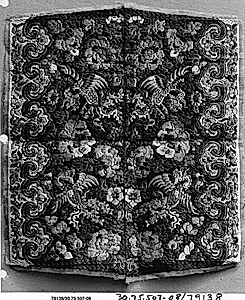
This exquisite embroidered silk panel, created by an unknown artist in 19th-century China during Qing dynasty (1644–1911), showcases the pinnacle of imperial textile artistry. Measuring a slender 18½ x 7¾ inches, its narrow form suggests it may have adorned a robe sleeve, a screen, or ceremonial garment, reflecting the era's obsession with opulent decoration for the elite. Crafted from fine silk ground with silk and metallic threads, the panel features delicate floral motifs—a hallmark of Chinese embroidery symbolizing prosperity, beauty, and harmony with nature. Qing embroiderers mastered techniques like satin stitch and couching to achieve luminous depth and shimmer, elevating textiles to wearable art. Metallic threads, often gold or silver-wrapped, denoted luxury and status, reserved for courtly or scholarly circles amid the dynasty's flourishing trade in silks. Now housed in the Metropolitan Museum of Art's Asian Art Department, thanks to the 1929 bequest of William Christian Paul, this panel invites us to marvel at Qing China's technical virtuosity and enduring aesthetic grace. A testament to anonymous craftsmanship, it whispers of gardens in bloom across centuries.