
Panel
Unknown Artist
late 16th–early 17th century
Medium
Silk, metallic thread; on silk; backed with cotton
Dimensions
Overall: 35 1/2 x 17 1/4 in. (90.2 x 43.8 cm) Overall with mounting: 49 3/4 × 24 3/4 in. (126.4 × 62.9 cm)
Classification
Textiles-Embroidered
Culture & Period
China · Ming dynasty (1368–1644)
Department
Asian Art
Museum
Metropolitan Museum of Art, New York, NY
Credit
Gift of Edna Bahr, 1962
Accession Number
62.97.51
Rights
Public Domain
Tags
Art Historical Context
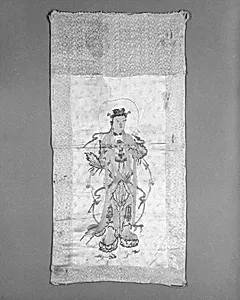
This stunning embroidered panel, created by an unknown artist during China's Ming dynasty (late 16–early 17th), exemplifies the era's unparalleled mastery of textile arts. Crafted from luxurious silk and shimmering metallic threads on a silk ground and backed with cotton for durability, the panel measures an impressive 35½ × 17¼ inches (90.2 × 43.8 cm). Housed in the Metropolitan Museum of Art's Art Department as a gift from Edna Bahr 1962, it belongs to the rich tradition of embroidered textiles that blended artistry with spiritual devotion. The artwork likely features Bodhisattvas—compassionate Buddhist figures central to Chinese religious life—highlighting the Ming period's flourishing synthesis of Daoism, Confucianism, and Buddhism. During this dynasty (1368–1644), embroidery reached new heights of technical sophistication, with artisans employing fine stitches to create lifelike textures and luminous effects from metallic threads, often for temple hangings, screens, or elite furnishings. These pieces were not mere decorations but symbols of piety and imperial refinement. Today, this panel invites visitors to appreciate the tactile elegance of Ming craftsmanship, where silk's sheen and gold accents evoke the divine glow of enlightenment. A testament to China's textile legacy, it bridges the opulent past with our modern gaze.