
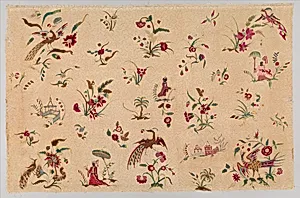
Panel for a skirt or petticoat
Unknown Artist
1690–1710
Medium
Silk embroidered on linen
Dimensions
35 1/2 x 52 in. (90.2 x 132.1 cm); Overall with mounting: 35 11/16 in. × 52 7/16 in. × 3 in. (90.6 × 133.2 × 7.6 cm)
Classification
Textiles-Embroidered
Culture
British
Department
European Sculpture and Decorative Arts
Museum
Metropolitan Museum of Art, New York, NY
Credit
Purchase, Friends of European Sculpture and Decorative Arts Gifts, 2011
Accession Number
2011.412
Rights
Public Domain
Tags
Art Historical Context
This exquisite embroidered panel, likely designed for a skirt or petat, dates to 1690–1710 and hails from Britain during the late Baroque era. Crafted from silk threads on a linen ground, it exemplifies the opulence of period fashion, where such lavish textiles adorned the lower layers of women's gowns, visible through translucent outer fabrics. Measuring over 35 by 52 inches, it have formed a dramatic sweep in courtly or elite wardrobes, signaling wealth and refined taste. The artwork shines in the chinoiserie style—a European fascination with imagined Chinese motifs that swept Britain in the late 17th century, fueled by expanding trade with Asia. Delicate embroidery depicts birds, flowers, and human figures in stylized, exotic scenes, blending whimsy with intricate detail. Silk's lustrous sheen on sturdy linen allowed for fine stitches that captured movement and depth, a labor-intensive technique requiring skilled needlewomen and often months of work. As a rare survivor of everyday luxury wear, this panel highlights how decorative arts intertwined with fashion and global exchange. Now in the Metropolitan Museum of Art's European Sculpture and Decorative Arts collection, it invites us to envision the rustle of silk skirts at a candlelit assembly, where East met West in threads of silk.