
Panel fragment
Unknown Artist
ca. 8th–7th century BCE
Medium
Ivory
Dimensions
2 5/16 × 6 1/8 × 3/16 in. (5.9 × 15.6 × 0.4 cm)
Classification
Ivory/Bone-Reliefs
Culture & Period
Iran · Iron Age III
Department
Ancient Near Eastern Art
Museum
Metropolitan Museum of Art, New York, NY
Credit
Fletcher Fund, 1951
Accession Number
51.131.6
Rights
Public Domain
Tags
Art Historical Context
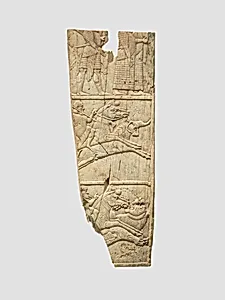
This delicate ivory panel fragment, dating to around the 8th–7th century BCE, hails from Iron Age III Iran and offers a glimpse into the artistry of the Ancient Near East. Carved in low relief, it features dynamic scenes of horses and human, likely capturing moments of elite life, processions, or equestrian prowess. At just 2 5/16 × 6 1/8 inches, its slender profile (a mere 3/16 inch thick) suggests it once adorned furniture, such as a throne or bed frame, in a high-status setting. Ivory, a prized luxury material sourced from elephants or possibly hippos via ancient trade routes, was carved with remarkable precision using fine tools to achieve intricate details on such a thin surface. This technique highlights the advanced craftsmanship of Iranian artisans during a period of cultural flourishing, when iron tools revolutionized metalwork and influenced decorative arts. Acquired by The Metropolitan Museum of Art through the Fletcher Fund in 1951, this fragment embodies the sophistication of Iron Age societies in Iran, where such reliefs served not only aesthetic purposes but also symbolic ones—horses often denoting power and mobility in a world of emerging empires. A testament to lost grandeur, it invites us to imagine the vibrant courts it once embellished.