
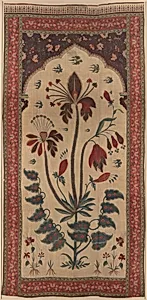
Panel from a Tent Lining (Qanat)
Unknown Artist
17th century
Medium
Cotton; plain weave, mordant dyed and painted, resist-dyed
Dimensions
Textile: L. 103 in. (261.6 cm) W. 50 in. (127 cm) Mount: L. 114 1/4 in. (290.2 cm) W. 59 in. (149.9 cm) D. 2 1/2 in. (6.4 cm) Wt. 165 lbs. (74.8 kg)
Classification
Textiles-Painted and/or Printed
Department
Islamic Art
Museum
Metropolitan Museum of Art, New York, NY
Credit
Rogers Fund, 1931
Accession Number
31.82.1
Rights
Public Domain
Tags
Art Historical Context
This exquisite panel from a tent lining, known as a *qanat*, hails from the 17th century exemplifies the splendor of Islamic textile arts. Crafted for the luxurious interiors of elite tents—used by nomadic rulers, pilgrims, or dignitaries during travel—these linings transformed portable dwellings into vibrant palaces. Likely produced in regions like Persia, India, or the Ottoman Empire, reflects the era's mastery of cotton weaving for durable, lightweight luxury goods that could withstand the rigors of the road. The artwork's plain-weave cotton base is adorned with sophisticated techniques: mordant dyeing to fix vibrant colors, hand-painting for intricate details, and resist-dyeing (similar to batik) to create precise patterns. Blooming with floral motifs—flowers, plants, and leaves—the design evokes paradise gardens, a common Islamic artistic theme symbolizing abundance and divine beauty. Measuring over 8 feet long, its monumental scale would have draped tent walls, immersing inhabitants in a fragrant, blooming oasis. Acquired through the Rogers Fund in 1931, this panel now graces the Metropolitan Museum of Art's Islamic Art collection. It highlights how textiles bridged artistry and functionality, preserving cultural heritage through portable masterpieces that captivated the senses.