
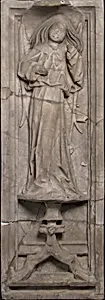
Panel from the Tomb of Don Garcia Osorio
Unknown Artist
16th century
Medium
Alabaster
Dimensions
Overall: 25 3/4 x 8 1/2 in. (65.4 x 21.6 cm)
Classification
Sculpture-Stone
Culture
Spanish
Department
Medieval Art
Museum
Metropolitan Museum of Art, New York, NY
Credit
Gift of J. Pierpont Morgan, 1917
Accession Number
17.190.2123
Rights
Public Domain
Art Historical Context
This elegant alabaster panel, carved by an unknown Spanish artist in the 16 century, forms part of the grand tomb monument for Don Garcia Osorio Measuring 25 3/4 x 8 1/2 inches, it exemplifies the refined stone sculpture of Renaissance-era Spain, where alabaster's soft, translucent qualities allowed sculptors to achieve delicate reliefs with lifelike depth and subtle play of light. Such panels often adorned elite tombs, narrating the deceased's life, virtues, or heraldry through intricate carvings. Alabaster held special significance in Spanish funerary art, particularly in Castile, prized for its workability and luminous finish that evoked marble's prestige at lower cost. Crafted during a period of artistic flourishing under Habsburg rule, this piece reflects the transition from medieval Gothic traditions to Renaissance naturalism, blending symbolic motifs with emerging realism. Its presence in the Metropolitan Museum of Art's Medieval Art collection—gifted by J. Pierpont Morgan in 1917—highlights its enduring appeal as a window into Spain's noble commemorative practices. Visitors will appreciate how this modest yet masterful panel captures the solemnity of 16th-century mortality, inviting reflection on legacy and craftsmanship.