
Panel (Furnishing Fabric)
c. 1815
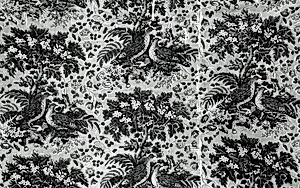
Medium
Cotton, plain weave; block printed
Dimensions
a: 33 × 60.3 cm (13 × 23 3/4 in.); b: 63.5 × 98.4 cm (25 × 38 3/4 in.)
Classification
textile
Department
Textiles
Museum
Art Institute of Chicago
Accession Number
6652
Rights
Public Domain
Art Historical Context
This vibrant furnishing fabric panel produced by the Bannister Print Works around 1815, exemplifies early 19th-century British innovation. Hailing from a renowned Lancashire printworks, these cotton pieces—comprising two panels (one 13 × 23¾ inches, the other 25 × 38¾ inches)—were designed for home interiors like curtains or upholstery, reflecting the Regency era's growing demand for affordable, stylish domestic goods amid post-Napoleonic prosperity. Crafted from plain-weave cotton and block-printed by hand, the fabric showcases a labor-intensive technique where wooden blocks, carved with intricate patterns and inked with pigments, were meticulously stamped onto the cloth. This method, at its peak before mechanized roller printing took over, allowed for bold colors and detailed motifs, often inspired by neoclassical or floral themes popular in British homes. Bannister Hall's output was celebrated for its quality and variety, making luxury designs accessible to the middle class. Today, housed in the Art Institute of Chicago's Textiles Department, these panels offer a tactile glimpse into industrializing Britain's textile trade, highlighting how block printing bridged artisanal craft and mass production during a transformative age. Visitors can appreciate the fabric's enduring vibrancy, a testament to the era's technical mastery.