
明晚期 緙絲百鳥朝鳳圖屏|Panel with a Phoenix and Birds in a Rock Garden
Unknown Artist
late 16th–early 17th century
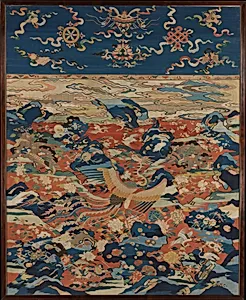
Medium
Silk and metallic thread tapestry (kesi)
Dimensions
Overall: 88 1/4 x 71 in. (224.2 x 180.3 cm)
Classification
Textiles-Tapestries
Culture & Period
China · Ming dynasty (1368–1644)
Department
Asian Art
Museum
Metropolitan Museum of Art, New York, NY
Credit
Seymour Fund, 1960
Accession Number
60.1
Rights
Public Domain
Tags
About this artwork
This magnificent silk and metallic thread tapestry exemplifies the height of Chinese kesi weaving during the late Ming dynasty. The composition depicts a phoenix, the mythological bird symbolizing imperial power and auspicious fortune, flying among numerous smaller birds in a fantastical rock garden setting. Kesi, meaning 'cut silk,' is an intricate tapestry technique first appearing during the Tang dynasty and reaching its artistic zenith during the Ming period. The weaver created this panel us...
Art Historical Context
This stunning silk and metallic thread tapestry, known as *Panel with a Phoenix and in a Rock Garden*,ails from the late Ming (late 16th–early 17th century). Crafted by an unknown master weaver, it captures a majestic phoenix—the mythical bird embodying imperial power and good fortune—soaring amid a flock of smaller birds in fantastical rock garden. theme of "hundred birds paying to the phoenix" symbolizes harmony, a motif beloved in Ming decorative arts,oking the natural order of the cosmos and imperial authority. Exemplifying the pinnacle of *kesi* (or "cut silk") weaving, a technique originating in the Tang dynasty and perfected during the Ming era, the panel was created by meticulously interweaving vibrant silk and gold threads through a warp. This labor-intensive process results in tiny slits between color blocks, lending the textile its shimmering, jewel-like quality. At over seven feet tall (88 1/4 x 71 in.), its brilliant hues and luxurious materials mark it as a high-status commission, likely for an imperial palace or elite patron, serving as a grand wall hanging or screen. Now housed in the Metropolitan Museum of Art's Asian Art department, this masterpiece showcases the extraordinary technical prowess and artistic elegance of Chinese textile artisans, blending symbolism, innovation, and opulence in a timeless celebration of nature's splendor.