
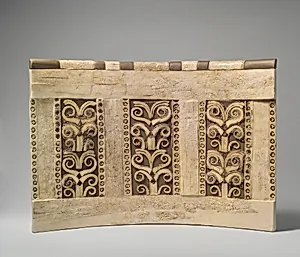
Panel with a tree pattern
Unknown Artist
ca. 8th century BCE
Medium
Ivory, wood (modern)
Dimensions
13 7/8 × 19 5/8 × 6 in., 5.5 lb. (35.2 × 49.8 × 15.2 cm)
Classification
Ivory/Bone-Reliefs-Inscribed
Culture & Period
Assyrian · Neo-Assyrian
Department
Ancient Near Eastern Art
Museum
Metropolitan Museum of Art, New York, NY
Credit
Rogers Fund, 1959
Accession Number
59.107.1
Rights
Public Domain
Tags
Art Historical Context
This exquisite Neo-Assyrian ivory panel, dating to around the 8th century, showcases the refined artistry of ancient Assyrian craftsmen. Carved in low relief and classified as an inscribed ivory, it features a delicate tree pattern—a motif deeply symbolic in Mesopotamian culture, often representing sacred trees linked to fertility, life, and divine protection. Discovered among luxurious furnishings from Assyrian palaces, such panels adorned furniture like thrones and beds, reflecting the empire's wealth and power during its imperial height under kings like Sargon II and Sennacherib. Crafted from elephant ivory, a prized import symbolizing elite status, the panel measures 13⅞ × 19⅝ × 6 inches and weighs 5.5 pounds. Modern wood supports it, preserving its fragile form for posterity. The intricate carving technique highlights Assyrian mastery of stylized, symmetrical designs, where trees rise in rhythmic patterns, possibly evoking stylized date palms or mythical "trees of life" seen across Near Eastern art. Acquired through the Rogers Fund in 1959, this piece from the Metropolitan Museum of Art's Ancient Near Eastern collection offers a window into daily opulence and religious symbolism of the Neo-Assyrian world, blending aesthetic beauty with profound cultural resonance.