
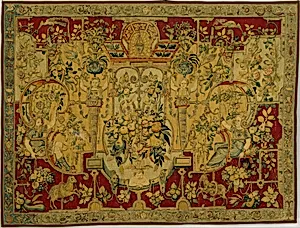
Panel with grotesques, from a set of bed hangings
ca. 1550–60
Medium
Silk, wool, silver and silver-gilt thread (20-22 warps per inch, 8-9 per cm.)
Dimensions
65 1/2 × 83 3/4 in. (166.4 × 212.7 cm)
Classification
Textiles-Tapestries
Culture
Netherlandish, Brussels
Department
European Sculpture and Decorative Arts
Museum
Metropolitan Museum of Art, New York, NY
Credit
Gift of George Blumenthal, 1941
Accession Number
41.100.384
Rights
Public Domain
Tags
Art Historical Context
This exquisite panel, designed by Netherlandish artist Cornelis Floris II around 1550–60, hails from a luxurious set of bed hangings in Brussels, a renowned center for production during the Renaissance. Floris, a pioneering Mannerist architect and engraver, drew inspiration from ancient Roman grotesquesfantastical motifs of intertwined figures, flora, and fauna rediscovered in the era's excavations. Here, whimsical birds, sheep, men,, and abundant fruit cavort in a playful, asymmetrical arabesque, embodying the period's delight in elaborate ornamentation for elite interiors. Woven with fine silk, wool, and shimmering silver and silver-gilt threads (at a precise 20–22 warps per inch), the tapestry showcases the technical virtuosity of Brussels weavers. Its grand scale—over 5 by 7 feet—suggests it draped opulent four-poster beds, offering both insulation and a dazzling display of wealth in chilly Northern European castles. The metallic threads catch the light, evoking the sumptuousness of courtly life. Today, this rare survivor graces the Metropolitan Museum of Art, gifted by George Blumenthal in 1941. It invites us to marvel at how 16th-century designers blended fantasy and craftsmanship to transform everyday spaces into theaters of imagination.