
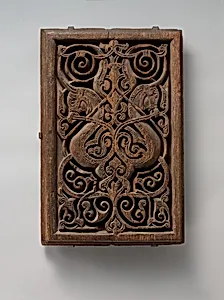
Panel with Horse Heads
Unknown Artist
11th century
Medium
Wood (teak); carved
Dimensions
H. 13 3/4 in. (34.9 cm) W. 8 15/16 in. (22.7 cm) D. 11/16 in. (1.7 cm) Object with mount: L. 14 1/8 in. (35.9 cm) W. 9 1/8 in. (23.2 cm) D. 1 5/8 in. (4.1 cm)
Classification
Wood
Department
Islamic Art
Museum
Metropolitan Museum of Art, New York, NY
Credit
Rogers Fund, 1911
Accession Number
11.205.2
Rights
Public Domain
Tags
Art Historical Context
This carved teak wood panel from the 11th century offers a glimpse into the rich tradition of Islamic decorative arts. Created by an unknown artist, the rectangular relief features stylized horse heads, a motif that likely held symbolic meaning related to strength and nobility in medieval Islamic culture. Now housed in the Metropolitan Museum of Art’s Department of Islamic Art, the piece exemplifies how functional objects could become vehicles for artistic expression during this era. Teak, prized for its durability and fine grain, allowed artisans to achieve intricate details through carving techniques that highlight both the wood’s natural beauty and the craftsman’s skill. Such panels were often incorporated into architectural settings like doors, screens, or furniture, blending utility with ornament. The work’s acquisition through the Rogers Fund in 1911 underscores its enduring value as a testament to cross-cultural exchanges along trade routes where teak traveled from South Asia into Islamic lands. Visitors can appreciate how the horse motif connects to broader artistic themes of the period, evoking movement and vitality within a restrained, elegant composition. This modest yet finely executed panel reminds us of the anonymous masters who elevated everyday materials into lasting cultural treasures.