
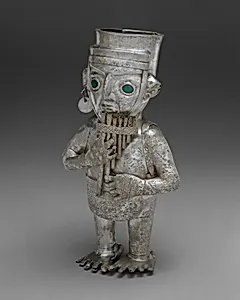
Panpiper Vessel
14th–15th century
Medium
Silver, malachite
Dimensions
H. 8 1/2 × W. 4 1/2 × D. 2 5/8 in. (21.6 × 11.4 × 6.7 cm)
Classification
Metal-Containers
Culture
Chimú
Department
Arts of Africa, Oceania, and the Americas
Museum
Metropolitan Museum of Art, New York, NY
Credit
The Michael C. Rockefeller Memorial Collection, Gift of Nelson A. Rockefeller, 1969
Accession Number
1978.412.219
Rights
Public Domain
Tags
Art Historical Context
This exquisite *Panpiper Vessel*, crafted by Chimú artists in the 14th–15th, captures the vibrant musical traditions of Peru's north coast. Fashioned from silver and malachite, vessel stands about 8½ inches tall, its slender form depicting a male musician playing panpipes—a hallmark of Andean wind instruments made from reeds or ceramic. As a metal container, it likely served both practical and ceremonial purposes, such as holding liquids for rituals or elite use, showcasing the Chimú's mastery of lost-wax casting and repoussé techniques to create intricate, lifelike figures. The Chimú Kingdom (ca. AD 900–1470), centered in the Moche Valley, was renowned for its advanced metallurgy, producing stunning works in gold, silver, and alloys that symbolized power and divinity. Panpipes symbolized harmony with nature and communal celebrations, often linked to rain-making rituals in this arid region. This vessel's detailed rendering of the musician's posture and attire reflects the culture's emphasis on music in social and religious life, before the Inca conquest absorbed Chimú artistry. On view in the Metropolitan Museum of Art's Arts of Africa, Oceania, and the Americas department, this piece from The Michael C. Rockefeller Memorial Collection invites us to hear the echoes of ancient melodies in gleaming silver.