
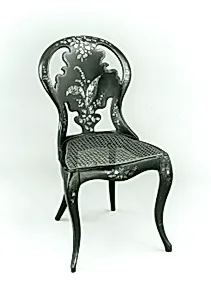
Papier-mâché side chair
Unknown Artist
ca. 1830–60
Medium
Wood, papier-mâché, black lacquer, painted and gilded, mother-of-pearl, caned seat.
Dimensions
H. 79.5 cm, W. 42 cm, D. 38.4 cm
Classification
Woodwork-Furniture
Culture
British (?)
Department
Robert Lehman Collection
Museum
Metropolitan Museum of Art, New York, NY
Credit
Robert Lehman Collection, 1975
Accession Number
1975.1.2069
Rights
Public Domain
Tags
Art Historical Context
This elegant papier-mâché side chair dating to around 1830–60, exemplifies the inventive furniture-making techniques of early Victorian Britain. Crafted from a wood core layered with papier-mâché lightweight, moldable material popularized in Birmingham workshops—the chair features a glossy black lacquer finish adorned with painted and gilded floral motifs, intricate mother-of-pearl inlays, and a woven caned seat. At just 79.5 cm high, its compact form (42 cm wide, 38.4 cm deep) made it ideal for intimate drawing rooms or side tables in fashionable homes. Papier-mâché revolutionized furniture design during this Rococo Revival period, allowing artisans to create ornate, three-dimensional decorations that would have been costly or impossible in solid wood alone. The black lacquer, inspired by Asian imports, provided a dramatic backdrop for the shimmering gilding and iridescent shell inlays, evoking luxury and exoticism. Likely British, this piece reflects the era's blend of industrial innovation and romantic ornamentation, bridging handmade craftsmanship with emerging mass production. Now in the Robert Lehman Collection at The Metropolitan Museum of Art, the chair offers a glimpse into 19th-century domestic refinement, where everyday objects became canvases for artistic flourish. Visitors might imagine it holding a teacup amid lively soirées, its floral details blooming eternally.