
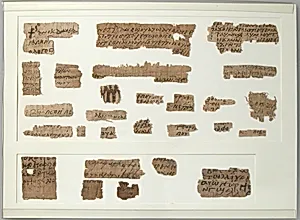
Papyri Fragments
Unknown Artist
7th century
Medium
Papyrus and ink
Dimensions
Framed: 11 1/4 x 15 in. (28.5 x 38.1 cm)
Classification
Papyrus
Culture
Coptic
Department
Medieval Art
Museum
Metropolitan Museum of Art, New York, NY
Credit
Rogers Fund, 1912
Accession Number
12.180.437
Rights
Public Domain
Tags
Art Historical Context
These delicate *Papyri Fragments* 7th-century Coptic Egypt offer a rare glimpse into the daily life and literacy of early medieval Christian communities in the Nile Valley. Crafted by an unknown artist using ink on papyrus—a lightweight, plant-based material derived from the Nile's reeds that had been the backbone of Egyptian writing for millennia—these fragments exemplify the enduring tradition of documentary production. Framed at 11¼ x 15 inches, now reside in the Metropolitan Museum of Art's Medieval Art Department, acquired through the Rogers Fund in 1912. As classified papyrus documents, they likely preserve administrative records, religious texts, or personal correspondence in the Coptic script, a late evolution of ancient Egyptian hieroglyphs adapted for the Coptic language used by Christians after the Arab conquests. The ink's fluid application highlights masterful calligraphic techniques, where precision and rhythm conveyed both practicality and subtle artistry amid a shifting cultural landscape. These fragments hold immense historical significance, bridging pharaonic traditions with Byzantine and early Islamic influences. They illuminate Coptic resilience, revealing how communities maintained their identity through written word, making them invaluable for scholars studying medieval Egypt's social and spiritual fabric. A testament to everyday endurance, they invite visitors to ponder the voices etched on these fragile sheets over 1,300 years ago.