
Papyrus Fragment
Unknown Artist
11th–12th century
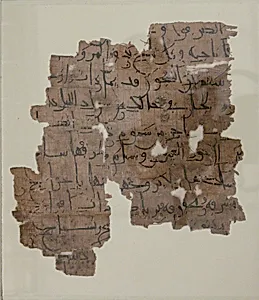
Medium
Ink on papyrus
Dimensions
H. 5 1/4 in. (12.7 cm) W. 5 3/4 in. (14.6 cm)
Classification
Codices
Department
Islamic Art
Museum
Metropolitan Museum of Art, New York, NY
Credit
Museum Accession
Accession Number
x.434
Rights
Public Domain
Tags
Art Historical Context
This delicate *Papyrus Fragment*, dating to the 11th–12th century, offers a rare glimpse into the world of manuscript production. Crafted with ink on papyrus—a material long favored in Egypt for its lightweight durability—this small codex fragment (5¼ × 5¾ in.) exemplifies the artistry of early Islamic scribes. Housed in the Metropolitan Museum of Art's Islamic Department, it survives as a testament to the transition from ancient writing supports to paper, which became dominant around this time as papyrus production waned. The fragment's calligraphy, a hallmark of Islamic art, showcases the scribe's mastery of fluid, rhythmic scripts essential for rendering sacred texts like the Qur'an. In a culture where figurative imagery was often avoided, calligraphy elevated writing to a profound aesthetic and spiritual form. Techniques involved precise ink application with reed pens, creating elegant lines that balanced legibility with beauty. As a codex piece—bound pages predating modern books—this artifact highlights the intellectual flourishing of the medieval Islamic world, where knowledge preservation was paramount. Though incomplete, its survival underscores the fragility and enduring allure of these ancient pages.