
Papyrus Fragment of a Letter
Unknown Artist
580–640
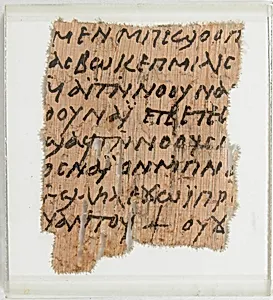
Medium
Papyrus with ink
Dimensions
Overall: 2 3/8 x 1 9/16 in. (6 x 4 cm) Framed: 2 5/8 x 2 5/16 in. (6.6 x 5.9 cm)
Classification
Papyrus
Culture
Coptic
Department
Medieval Art
Museum
Metropolitan Museum of Art, New York, NY
Credit
Rogers Fund, 1914
Accession Number
14.1.538
Rights
Public Domain
Art Historical Context
This delicate papyrus fragment, measuring just 2⅜ x 1⁹/₁₆ inches, preserves a portion of a letter from Coptic Egypt around 580–640 AD. Crafted with ink on the ancient plant-based medium of papyrus— the everyday writing surface of Mediterranean world—it offers a tangible link to the late antique period, just before the Arab conquest transformed the region. Acquired through the Rogers Fund in 1914, it in the Metropolitan Museum of's Medieval Art department, among Coptic treasures. In Coptic culture, a vibrant Christian community blending Egyptian traditions with Byzantine influences, such letters were vital for personal, administrative, or religious correspondence. The unknown scribe's hand, likely in Coptic script, reflects practical artistry: precise ink application on fragile sheets that rarely survived Egypt's humid climate. This fragment's survival is remarkable, hinting at everyday literacy and communication in a monastic or lay context. As a snapshot of lived history, it underscores papyrus's role in transmitting knowledge before parchment dominated. Visitors can marvel at how such a minuscule artifact illuminates the voices of early medieval Egyptians, bridging art and daily life.