
Par ici
1751 to 1775
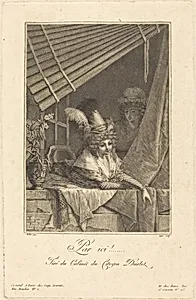
Medium
stipple engraving
Classification
Department
CG-E
Museum
National Gallery of Art, Washington, D.C.
Credit
Widener Collection
Accession Number
1942.9.2436
Rights
Public Domain
Art Historical Context
"Par ici" (This Way), a delightful stipple engraving from the Widener Collection at the National Gallery of Art was crafted by Jacques-Louis Copia an original by Jean-Baptiste Mallet between 175 and 1775. Mallet, a French painter for his genre scenes and fashionable vignettes, captured the playful spirit of 18th-century, while Copia faithfully translated it into print form. This work exemplifies the collaborative artistry of the Rococo era, where painters and engravers worked together to disseminate elegant imagery to a wider audience. Stipple engraving, the chosen medium, revolutionized printmaking in the late 18th century. By building tones through meticulously placed dots rather than lines, artists like Copia achieved soft, painterly effects that mimicked the sfumato of oil paintings. This technique was ideal for reproducing delicate textures—fabrics, skin tones, and atmospheric light—making intricate compositions accessible beyond elite collectors. Housed in the National Gallery's CG-E department as a classified print, "Par ici" reflects the period's cultural fascination with lighthearted social scenes, inviting viewers into a world of refined leisure. Though modest in scale, this piece holds artistic significance as a bridge between original painting and mass reproduction, preserving Mallet's whimsical vision for generations. A true gem for print enthusiasts! (198 words)