
Parasol
1885–90
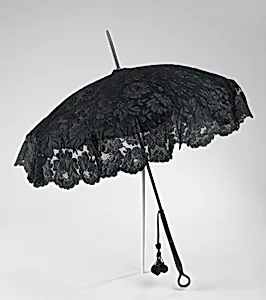
Medium
silk, wood, metal
Classification
Parasol
Culture
European
Department
Costume Institute
Museum
Metropolitan Museum of Art, New York, NY
Credit
Brooklyn Museum Costume Collection at The Metropolitan Museum of Art, Gift of the Brooklyn Museum, 2009; Gift of Marion Grant, 1943
Accession Number
2009.300.3036
Rights
Public Domain
Art Historical Context
Step into the elegant world of late 19th-century fashion *Parasol* (1885–90), by G. Fox &, a renowned retailer known for stylish accessories. This delicate piece from the Brooklyn Museum Costume Collection, now at The Museum of Art's Costume Institute, exemplifies European sophistication during the Victorian era's waning years. Parasols like this were essential for genteel women, shielding delicate skin from the sun while signaling social refinement and femininity. Made of luxurious silk for the canopy, polished wood for the handle, and metal reinforcements, the parasol highlights innovative material combinations that balanced beauty and functionality. Silk's sheen caught the light, enhancing its ornamental appeal, while wood and metal ensured durability for everyday promenade use. These elements reflect the period's craftsmanship, where accessories became miniature artworks blending utility with opulence. Culturally, such parasols underscored gender norms and leisure class ideals in Europe and America, often featured in Gilded Age portraits and literature. A gift from Marion Grant via the Brooklyn Museum, this survivor offers a tangible glimpse into the tactile glamour of bygone street style.