
Parasol
Unknown Artist
1850–59
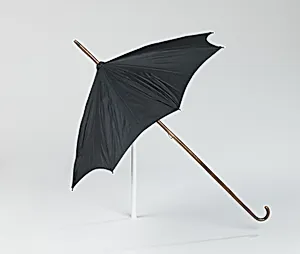
Medium
silk, wood, metal
Classification
Parasol
Culture
American
Department
Costume Institute
Museum
Metropolitan Museum of Art, New York, NY
Credit
Brooklyn Museum Costume Collection at The Metropolitan Museum of Art, Gift of the Brooklyn Museum, 2009; Gift of Alicia Braddon in memory of Miss E. S. Gilbert, 1959
Accession Number
2009.300.3197
Rights
Public Domain
Art Historical Context
Step into the elegant world of mid-19th-century American with this exquisite parasol from the 1850s, crafted from luxurious silk, sturdy wood, and gleaming metal. As a quintessential accessory for women of the era, it served not just as sun protection but as a statement of refined taste and social standing. The silk canopy provided lightweight shade, while the wooden handle offered a comfortable grip, often carved or shaped for aesthetic appeal, and metal elements added durability and subtle ornamentation. Housed in The Metropolitan Museum of Art's Costume Institute, this parasol reflects the Victorian-influenced style of antebellum America, where such items were essential for ladies navigating urban promenades or garden parties. Parasols symbolized modesty and femininity, shielding delicate complexions from the sun's rays—a cultural norm tied to ideals of beauty and propriety. Though the artist remains unknown, the craftsmanship highlights the skilled artisanal traditions of the time, blending functionality with fashion. Today, it offers a tangible glimpse into everyday luxury, preserved through the Brooklyn Museum Costume Collection. Visitors can appreciate how these accessories wove utility and artistry into the fabric of 19th-century life.