
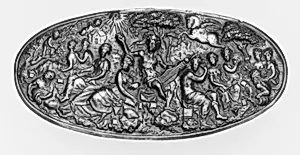
Parnassus
Unknown Artist
ca. 1560–65
Medium
Bronze
Dimensions
3 3/8 × 7 1/8 in. (8.6 × 18.1 cm)
Classification
Medals and Plaquettes
Culture
French or Flemish
Department
European Sculpture and Decorative Arts
Museum
Metropolitan Museum of Art, New York, NY
Credit
Gift of Ruth Blumka and Dr. Louis Slattery, in memory of Dr. Emanuel Winternitz, 1983
Accession Number
1983.408
Rights
Public Domain
Tags
Art Historical Context
Nestled in the Metropolitan Museum of Art's European Sculpture and Decorative Arts, *Parnassus* is a delicate bronze plaquette crafted around 1560–65 by an unknown French or Flemish artist. Measuring just 3 3/8 × 7 1/8 inches, this intimate relief likely evokes the mythical Mount Parnassus, home of Apollo and the Muses in classical antiquity. The tags hint at a gathering of male and female figures—poets, gods, and inspirations—celebrating the Renaissance humanist revival of Greek mythology as a symbol of artistic and intellectual pursuit. Bronze plaquettes like this one were a Renaissance innovation, small-scale sculptures cast using sophisticated lost-wax techniques, prized by collectors for their portability and refined detail. Produced in Northern Europe during a period of cultural exchange between France and Flanders, they bridged medals and larger sculptures, serving as affordable talismans of erudition for scholars and nobles. This example's compact form allowed for intricate narrative scenes, blending Gothic lingering naturalism with emerging Mannerist elegance. Gifted to the Met in 1983 in memory of Dr. Emanuel Winternitz, *Parnassus* invites us to ponder the era's passion for antiquity amid religious upheavals, reminding visitors that even tiny bronzes carried the weight of eternal inspiration.