
Parrot
Unknown Artist
ca. 1760
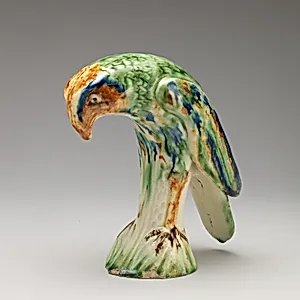
Medium
Lead-glazed earthenware
Dimensions
Height: 5 7/8 in. (14.9 cm)
Classification
Ceramics-Pottery
Culture
British, Staffordshire
Department
European Sculpture and Decorative Arts
Museum
Metropolitan Museum of Art, New York, NY
Credit
Gift of Mrs. Russell S. Carter, 1944
Accession Number
44.39.53
Rights
Public Domain
Tags
Art Historical Context
This charming lead-glazed earthenware figure a *Parrot*, created around 1760 in Staffordshire, England, stands just 5 7/8 inches tall, capturing the vibrant spirit of 18th-century British ceramics. Produced by an unknown artisan in the heart of the Potteries district, it exemplifies the region's booming industry, where factories churned out affordable decorative objects for middle-class homes. Staffordshire potters specialized in whimsical animal figures like this one, often modeled from molds and vividly colored to delight collectors. The use of lead-glazed earthenware was key to its appeal: the lead oxide in the glaze created a glossy, jewel-like sheen in bright hues—typically greens, reds, and yellows for parrots—while making the pottery durable yet lightweight. These pieces weren't just ornaments; they reflected a growing fascination with exotic birds, symbols of status and the expanding British Empire's trade routes bringing parrots from afar. Today, housed in The Metropolitan Museum of Art's European Sculpture and Decorative Arts department (gift of Mrs. Russell S. Carter, 1944), this *Parrot* offers a glimpse into everyday luxury. It highlights how ceramics democratized art, turning humble clay into lively companions for hearthsides across Georgian England.