
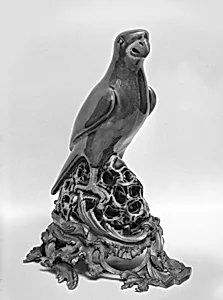
Parrot (one of a pair)
Unknown Artist
18th century
Medium
Porcelain with polychrome enamels and gilt bronze pedestal
Dimensions
H. 11 in. (27.9 cm)
Classification
Ceramics
Culture & Period
China · Qing dynasty (1644–1911)
Department
Asian Art
Museum
Metropolitan Museum of Art, New York, NY
Credit
The Friedsam Collection, Bequest of Michael Friedsam, 1931
Accession Number
32.100.430
Rights
Public Domain
Tags
Art Historical Context
This exquisite porcelain parrot, one of a pair crafted in 18th-century China during Qing dynasty (16441911), stands as a testament to the era's mastery of ceramic artistry. Perched on a gleaming gilt bronze pedestal, the 11-inch (27.9 cm) figure captures the's vibrant feathers and alert posture with remarkable realism, showcasing the technical prowess of imperial kilns, likely in Jingdezhen the porcelain capital. The medium—fine porcelain adorned with polychrome enamelshighlights a signature Qing innovation: overglaze enameling, which allowed for vivid, multilayered colors like soft pinks, greens, and golds that fired at lower temperatures to preserve delicate hues. This "famille rose" technique, peaking in the 18th century under Emperor Yongzheng and Qianlong, elevated decorative objects to luxurious status symbols for the elite, blending functionality with opulent display. In Chinese culture, parrots symbolized eloquence, fidelity, and exotic allure, often featured in scholarly gardens or imperial collections. Bequeathed to the Metropolitan Museum of Art through The Friedsam Collection in 1931, this piece invites visitors to marvel at Qing porcelain's global influence, bridging artistry and symbolism in Asia's rich ceramic heritage.