
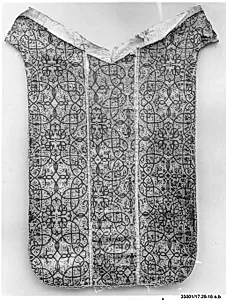
Part of a chasuble
Unknown Artist
16th century
Medium
Silk, linen and metal thread
Dimensions
L. 46 1/4 x W. 21 inches (117.5 x 53.3 cm)
Classification
Textiles-Woven
Culture
Spanish
Department
European Sculpture and Decorative Arts
Museum
Metropolitan Museum of Art, New York, NY
Credit
Rogers Fund, 1917
Accession Number
17.29.16a
Rights
Public Domain
Tags
Art Historical Context
This exquisite fragment from a 16th-century chasuble offers a glimpse into the op world of Renaissance ecclesiastical textiles. A chasuble, the ornate outer vestment worn by priests during Catholic Mass, was often richly decorated to symbolize divine splendor. Crafted in Spain during a golden age of religious art and exploration, this piece reflects the era's fervent Catholicism and the Catholic Monarchs' legacy, when lavish church adornments were commissioned to inspire devotion. Woven from silk and linen with gleaming metal threads, the textile measures 46¼ x 21 inches and features delicate floral motifs—a tag hallmark of Spanish embroidery. These materials, imported luxuries like silk from the East via trade routes, were laboriously combined using advanced techniques such as couching and laid work for the metal threads, creating a shimmering, jewel-like effect under candlelit altars. Such craftsmanship demanded skilled artisans, often women in monastic workshops, highlighting textiles' role as high art. Acquired through the Rogers Fund in 1917 and housed in the Metropolitan Museum of Art's European Sculpture and Decorative Arts Department, this survivor evokes Spain's cultural prestige. Imagine it draped over a priest amid the incense and chants of a grand cathedral— a testament to faith woven in thread.