
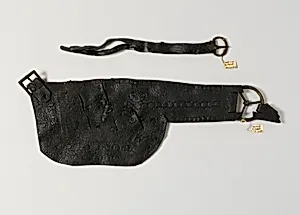
Part of a Harness
Unknown Artist
16th century
Medium
Leather, metal
Dimensions
H. 15 1/2 in. (39.3 cm)
Classification
Miscellaneous-Leatherwork
Culture
British
Department
Arms and Armor
Museum
Metropolitan Museum of Art, New York, NY
Credit
Bashford Dean Memorial Collection, Funds from various donors, 1929
Accession Number
29.158.460a, b
Rights
Public Domain
Art Historical Context
This exquisite fragment of a 16th-century British harness, crafted from leather reinforced with metal, offers a glimpse into the Tudor era's masterful leatherworking traditions. Measuring 15½ inches in height, it belongs to the Metropolitan Museum of Art's Arms and Armor department, highlighting its role in equestrian gear—likely a strap or fitting from a horse's harness used in warfare, tournaments, or ceremonial processions. Acquired through the Bashford Dean Memorial in 1929, it reflects the era's blend of functionality and fine craftsmanship. In 16th-century England, under monarchs like Henry VIII and Elizabeth I, such harness components were essential for mounting knights and cavalry, protecting both rider and steed amid the din of battlefields or the spectacle of jousts. Leather provided flexibility and comfort, while metal rivets or buckles ensured durability against the rigors of combat or travel. This piece exemplifies "miscellaneous leatherwork," a classification underscoring the unsung artistry of artisans who tanned, dyed, and tooled hides to create resilient, often ornate equipment. Though the artist remains unknown, the harness's survival speaks to the ingenuity of British armorers, preserving a tangible link to a time when horse and rider formed an unbreakable duo on the stage of history. Visitors can appreciate how everyday materials were transformed into tools of power and prestige.