
Partially Restored Oblique Lyre
Unknown Artist
ca. 1550–1458 B.C.
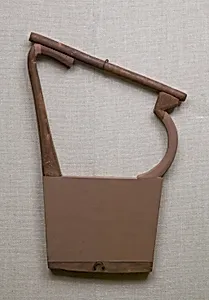
Medium
Wood (frame), bronze or copper alloy, (staple) Bronze
Dimensions
Length of crossbar 31.3 cm.; of soundbox 19.5 cm.; Top of soundbox 22.3 cm.; Base of soundbox 19.5 cm.; Length from crossbar to base of soundbox: longer side 44 cm.; shorter side 33 cm.; Height of soundbox 17 cm.
Classification
Music, lyre, oblique
Period
New Kingdom
Department
Egyptian Art
Museum
Metropolitan Museum of Art, New York, NY
Credit
Rogers Fund, 1916
Accession Number
16.10.504
Rights
Public Domain
Tags
Art Historical Context
Step back over 3,500 years to the early New Kingdom of ancient Egypt, during Dynasty 18 (ca. 1550–1458 B.C.), a time of imperial expansion under pharaohs like Thutmose III. This Restored Oblique Ly, from the Metropolitan Museum of Art's Art collection, exemplifies the sophisticated musical culture of the era. Lyres were prestigious stringed instruments, often played at royal banquets, temple rituals, and festivals, symbolizing harmony and divine order. Crafted with a wooden frame for the soundbox and arms, accented by bronze or copper alloy staples and bronze fittings, the lyre's oblique design—slanted arms connecting to a tapered soundbox—reflects innovative Egyptian woodworking and metalworking techniques. Measuring about 44 cm along its longer side from crossbar to base, it would have produced resonant tones with strings stretched across its 31.3 cm yoke. Though partially restored, surviving elements reveal the instrument's delicate construction, highlighting artisans' skill in balancing form and acoustics. As a rare survivor from this golden age, the lyre offers a window into Egypt's vibrant soundscape, where music bridged the mortal and divine. Acquired through the Rogers Fund in 1916, it invites us to imagine its melodies echoing through Theban palaces.