
Partisan
Unknown Artist
late 15th century
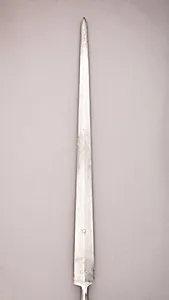
Medium
Steel, wood
Dimensions
L. 95 in. (241.3 cm); L. of head 39 3/4 in. (101 cm); W. 2 1/2 in. (6.4 cm); Wt. 4 lbs. 15.7 oz. (2259.5 g)
Classification
Shafted Weapons
Culture
Italian
Department
Arms and Armor
Museum
Metropolitan Museum of Art, New York, NY
Credit
Gift of William H. Riggs, 1913
Accession Number
14.25.209
Rights
Public Domain
Art Historical Context
Step into the riveting world of Renaissance warfare with *Partisan*, a masterful late 15th-century shafted weapon Italy, now housed in the Metropolitan Museum Art's Arms and Armor. This imposing polearm features a forged steel head measuring nearly 40 inches long, mounted on a wooden shaft totaling 95 inches—perfectly balanced at just under 5 pounds for agile handling by foot soldiers or ceremonial guards. Gifted by William H. Riggs in 1913, it exemplifies the pinnacle of Italian metalworking during a time of fierce city-state rivalries. Crafted in the bustling forges of Renaissance Italy, likely Milan or Brescia, the partisan was a versatile weapon wielded by infantry against cavalry or in pike formations. Its broad, double-edged blade could thrust, slash, or parry with deadly precision, reflecting the era's tactical innovations under condottieri like Francesco Sforza. The steel's durability and the shaft's sturdy wood highlight advanced techniques in heat treatment and joinery, blending utility with subtle artistry. As a cultural artifact, this partisan transports us to an age when arms were both tools of survival and symbols of status. Though its anonymous maker remains unknown, the weapon's elegant proportions and robust construction underscore Italy's dominance in arms production, offering visitors a tangible glimpse into the gritty glamour of 15th-century combat.