
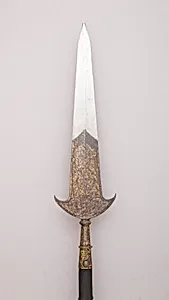
Partisan
Unknown Artist
ca. 1600
Medium
Steel, wood (ash), gold
Dimensions
L. 8 ft. 6 3/4 in. (261 cm); L. of head 20 3/8 in. (51.8 cm); W. 5 1/4 in. (13.4 cm); Wt. 4 lbs. 6 oz. (1984.5 g)
Classification
Shafted Weapons
Culture
French
Department
Arms and Armor
Museum
Metropolitan Museum of Art, New York, NY
Credit
Gift of William H. Riggs, 1913
Accession Number
14.25.355
Rights
Public Domain
Art Historical Context
Step into the world of Renaissance warfare with *Partisan*, a striking French shafted weapon from around 1600. Crafted by an unknown artisan, this polearm features a sharp steel head measuring 20⅜ inches long and 5¼ inches wide, mounted on an ash wood shaft to a total length of 8 feet 6¾ inches. At just over 4 pounds, it balances lethality with elegance, its surfaces enriched with gold accents that hint at ceremonial prestige. In late 16th-century France, partisans like this were wielded by elite infantry or guards, such as household troops or ceremonial units, during an era of religious wars and royal pageantry under kings like Henry IV. The steel blade, designed for thrusting and slashing, exemplifies the fusion of military utility and artistic refinement in European arms-making. Gold gilding elevated such weapons beyond the battlefield, transforming them into symbols of status and power. Today, this masterpiece resides in the Metropolitan Museum of Art's Arms and Armor Department, a gift from William H. Riggs in 1913. It showcases the era's metallurgical skill—forged steel tempered for durability—and the cultural value placed on decorated arms, bridging history, craftsmanship, and artistry for modern visitors.