
Partisan
Unknown Artist
18th century
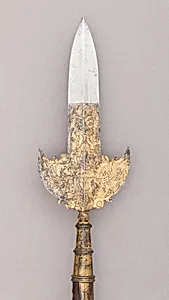
Medium
Steel, wood (cherry), iron, gold
Dimensions
L. 86 1/2 in. (219.7 cm); L. of head 12 3/4 in. (32.4 cm); W. 4 1/2 in. (11.5 cm); Wt. 2 lbs. 14 oz. (1304.1 g)
Classification
Shafted Weapons
Culture
Austrian
Department
Arms and Armor
Museum
Metropolitan Museum of Art, New York, NY
Credit
Gift of William H. Riggs, 1913
Accession Number
14.25.405
Rights
Public Domain
Art Historical Context
Step into the world of 18th-century Austrian arms and armor with this striking *Partisan*, a masterful example of a shafted weapon from the Habsburg era. Crafted by an unknown artist, it features a formidable steel head measuring 12¾ inches long, adorned with iron fittings and touches of gold for a regal gleam. The sturdy cherry wood shaft, extending to an impressive 86½ inches, balances the weapon at just under 3 pounds, making it both wieldable and imposing. Displayed in the Metropolitan Museum of Art's Arms and Armor Department, this piece was generously gifted by collector William H. Riggs in 1913. Partisans like this one evolved from Renaissance battlefield polearms into symbols of military prestige by the 18th century. In Austria, under the powerful Habsburg monarchy, they were often carried by elite guards or infantry units during parades and ceremonies, blending lethal utility with ornate decoration. The use of high-quality cherry wood for the haft speaks to fine woodworking traditions, while gold inlays highlight the artisan's skill in metalworking and gilding—techniques reserved for weapons of status. This *Partisan* invites us to reflect on Europe's martial culture, where beauty and brutality converged. Though no longer swung in combat, its elegant lines and robust form remind visitors of the artistry behind warfare's tools.