
Pater Patriae
Unknown Artist
ca. 1800
Medium
Oil on glass
Dimensions
14 1/4 x 10 1/4 in. (36.2 x 26 cm)
Classification
Painting
Culture
Chinese, for American market
Department
The American Wing
Museum
Metropolitan Museum of Art, New York, NY
Credit
Gift of Edgar William and Bernice Chrysler Garbisch, 1964
Accession Number
64.309.6
Rights
Public Domain
Tags
Art Historical Context
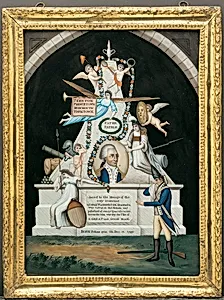
"Pater Patriae," "Father of the Fatherland," is a captivating ca. 1800 oil on glass painting (14¼ × 10¼ in.) created by unknown Chinese artist for the market. Housed in The Metropolitan Museum of Art's American Wing, this work depicts George Washington elevated as a national hero, surrounded by men,, and angels—symbolizing divine reverence and patriotic unity. Produced shortly after Washington's death in 9, it captures the of early American idolization, where the first president was venerated almost as a saintly figure. The medium of oil on glass, likely reverse-painted for a luminous, jewel-like glow, was a specialty of Chinese export artists adapting Western iconography for eager U.S. consumers. This technique, popular in folk art traditions, allowed for intricate details and vibrant colors that shimmered under light, making it a prized parlor decoration in Federal-era homes. The artwork exemplifies early cultural exchange between China and the burgeoning United States, blending Eastern craftsmanship with American symbolism during a time of expanding trade. A generous gift from Edgar William and Bernice Chrysler Garbisch in 1964, "Pater Patriae" highlights how global influences shaped American visual culture, offering visitors a window into the era's blend of reverence, commerce, and artistry.