
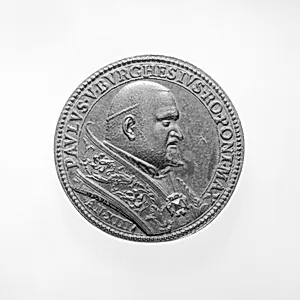
Paul V (Pope, 1605–21)
Medium
Bronze
Dimensions
Diameter: 1 1/2 in. (3.8 cm)
Classification
Medals and Plaquettes
Culture
Italian, Rome
Department
European Sculpture and Decorative Arts
Museum
Metropolitan Museum of Art, New York, NY
Credit
Bequest of Rupert L. Joseph, 1959
Accession Number
60.55.19
Rights
Public Domain
Tags
About this artwork
This bronze, created in 1617, represents significant artistic achievement by Giacomo Antonio Moro, a artist. The piece demonstrates the technical capabilities and aesthetic conventions of art during this historical period. Working in bronze, the artist employed materials and techniques characteristic of the era, creating visual effects that convey both subject matter and artistic vision. Museum collections preserve such works to ensure continued study and appreciation, providing opportunities fo...
Art Historical Context
This exquisite bronze medal, crafted in 1617 by Roman artist Giacomo Antonio Moro, captures Pope Paul V (r. 1605–21) in a classic profile portrait. Measuring just 1 1/2 inches in diameter, it belongs to the tradition of medals and plaquettes—small-scale sculptures prized in Renaissance and early Baroque Italy for commemorating dignitaries and events. Moro's work exemplifies the meticulous craftsmanship of Roman workshops, where artists like him produced intimate yet powerful likenesses for collectors, patrons, and as diplomatic gifts. The choice of bronze underscores the era's technical prowess: cast using lost-wax methods, these medals achieved fine details in facial features, drapery, and inscriptions, evoking the grandeur of papal authority amid Rome's Counter-Reformation fervor. Paul V, a key figure in commissioning St. Peter's Basilica expansions, is rendered with dignified poise, reflecting the cultural reverence for the papacy as both spiritual and political leader. Housed in the Metropolitan Museum of Art's European Sculpture and Decorative Arts collection (Bequest of Rupert L. Joseph, 1959), this piece invites us to ponder the artistry of everyday historical objects. Through its survival, we glimpse 17th-century Rome's blend of innovation and tradition, reminding visitors of how tiny treasures preserve vast legacies of faith, power, and human creativity.