
Pavement tiles
Unknown Artist
16th–17th century
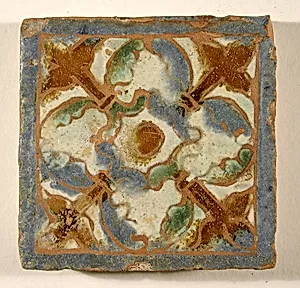
Medium
Tin-glazed earthenware
Dimensions
Each tile (approximate): 3 1/8 × 3 1/8 in. (7.9 × 7.9 cm)
Classification
Ceramics-Pottery
Culture
Spanish, Seville
Department
European Sculpture and Decorative Arts
Museum
Metropolitan Museum of Art, New York, NY
Credit
Gift of Henry G. Marquand, 1894
Accession Number
94.4.431a–x
Rights
Public Domain
Art Historical Context
These charming pavement tiles, crafted in Seville, Spain, during the 16th–17th centuries, exemplify the artistry of tin-glazed earthenware, a technique that transformed humble clay into dazzling decorative surfaces. Each square tile, measuring about 3⅛ × 3⅛ inches, was fired with a tin-oxide glaze that created an opaque, white background ideal for vibrant painted motifs—often geometric patterns, florals, or heraldic designs suited for flooring in grand homes, churches, and public buildings. Seville emerged as a major hub for this craft during Spain's Golden Age, fueled by trade, wealth from the Americas, and Islamic-influenced traditions from earlier Moorish azulejos. These tiles not only protected floors from wear but also added opulent color and symbolism, reflecting Renaissance and Baroque tastes for elaborate interiors. The tin-glazing process, involving multiple firings, ensured durability and luminosity, making them a staple of Spanish decorative arts. Today, preserved at The Metropolitan Museum of Art thanks to a 1894 gift from Henry G. Marquand, these anonymous masterpieces invite us to imagine the footsteps of nobles and worshippers echoing across patterned floors, a testament to Seville's enduring ceramic legacy.