
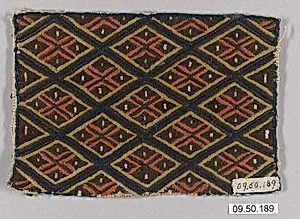
Peasant costume fragment
Unknown Artist
18th–19th century
Medium
Wool on canvas
Dimensions
L. 5 1/2 x W. 3 3/4 inches (14 x 9.5 cm)
Classification
Textiles-Embroidered
Culture
Albanian or Montenegrin
Department
European Sculpture and Decorative Arts
Museum
Metropolitan Museum of Art, New York, NY
Credit
Rogers Fund, 1909
Accession Number
09.50.189
Rights
Public Domain
Art Historical Context
This delicate fragment of a peasant costume, embroidered in wool on canvas, hails from Albanian or Montenegrin culture the 18th–19th centuries. Measuring just 5½ by 3¾ inches (14 x 9.5 cm), it offers a glimpse into the vibrant folk traditions of the Balkans, where such textiles adorned everyday garments of rural communities. Acquired through the Rogers Fund in 1909 and housed in the Metropolitan Museum of's Department of European Sculpture and Decor Arts, it exemplifies the intricate craftsmanship of embroidered textiles classified as cultural artifacts. The embroidery technique, using wool threads on a canvas ground, highlights the skill of anonymous artisans who wove stories of identity and heritage into fabric. In regions like Albania and Montenegro, peasant costumes were rich with symbolic patterns, often passed down through generations, blending functionality with artistry. Though small, this piece preserves the tactile beauty of folk embroidery, a medium that democratized decoration beyond elite workshops. Today, it invites visitors to appreciate the everyday artistry of pre-industrial Europe, reminding us how textiles like this captured the spirit of resilient mountain communities amid Ottoman influences and emerging national identities.