
Peasant costume fragment
Unknown Artist
18th–19th century
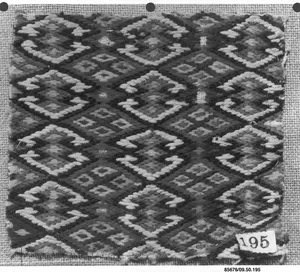
Medium
Wool on canvas
Dimensions
L. 4 x W. 3 5/8 inches (10.2 x 9.2 cm)
Classification
Textiles-Embroidered
Culture
Albanian or Montenegrin
Department
European Sculpture and Decorative Arts
Museum
Metropolitan Museum of Art, New York, NY
Credit
Rogers Fund, 1909
Accession Number
09.50.195
Rights
Public Domain
Art Historical Context
This delicate fragment of a peasant costume, embroidered with wool on canvas,ails from the 18th or 19th century and measures just 4 by 3⅝ inches. Likely originating from Albanian or Montenegrin culture, it exemplifies the rich textile traditions of Balkan rural communities. Such small pieces often came from larger garments like vests, aprons, or sashes, where embroidery served both practical and decorative purposes, adorning everyday wear with patterns that conveyed cultural identity and regional pride. The technique of wool embroidery on canvas highlights the skill of anonymous artisans—typically women—who wove stories of heritage into fabric using readily available materials. In a time before industrialization, these textiles were labor-intensive heirlooms, blending functionality with folk artistry. Their survival as fragments speaks to the durability of wool and the value placed on handcrafted goods in peasant life. Acquired through the Rogers Fund in 1909, this piece resides in The Metropolitan Museum of Art's Department of European Sculpture and Decorative Arts. It invites visitors to appreciate the overlooked artistry of ordinary people, bridging the gap between fine art and lived cultural history.