
Peat Bog, Scotland
published 1812
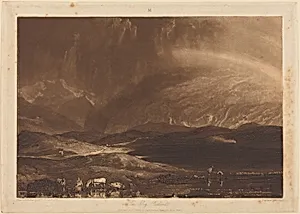
Medium
mezzotint and etching
Classification
Department
CG-E
Museum
National Gallery of Art, Washington, D.C.
Credit
Rosenwald Collection
Accession Number
1943.3.8173
Rights
Public Domain
Art Historical Context
**Peat Bog, Scotland** (published 1812) is a striking print created by the visionary British artist J.M.W. Turner in collaboration with engraver George Clint. Housed in the National Gallery of Art's Rosenwald Collection, this mezzotint and etching captures the moody, untamed beauty of the Scottish countryside. Turner, a pioneer of Romanticism, was renowned for his dramatic landscapes that evoked the sublime power of nature, often drawing from his travels across Britain. The artwork's medium—mezzotint combined with etching—highlights innovative printmaking techniques of the era. Mezzotint, known as the "black manner," allowed for rich tonal gradations from deep shadows to luminous highlights, mimicking the velvety effects of oil painting. Etching provided crisp lines for detail, making this an accessible reproduction of Turner's original vision. Published during the Napoleonic Wars, when British pride in national scenery surged, it reflects growing fascination with Scotland's rugged terrain. Peat bogs, essential to rural life for fuel, symbolize the raw, atmospheric wildness Turner adored. This print not only showcases his mastery of light piercing misty expanses but also Clint's skillful translation, bridging fine art and public appreciation in early 19th-century Britain. A window into Romantic reverence for nature's mysteries!