
Pectoral Disc Ornament
Unknown Artist
19th century
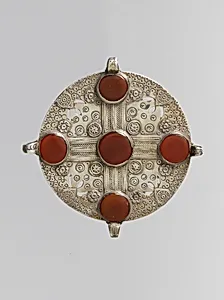
Medium
Silver, chased, with applied and punched decoration, decorative wire, openwork, and table-cut carnelians
Dimensions
H. 15 1/8 in. (38.4 cm) W. 5 3/8 in. (13.7 cm) Diam. 5 3/4 in. (14.6 cm)
Classification
Jewelry
Department
Islamic Art
Museum
Metropolitan Museum of Art, New York, NY
Credit
Gift of Marshall and Marilyn R. Wolf, 2016
Accession Number
2016.714.4
Rights
Public Domain
Art Historical Context
This exquisite Pectoral Disc Ornament a 19th-century masterpiece from the Islamic world, exemplifies the opulent jewelry traditions of the period. Crafted in silver and measuring about 15 inches in height, it was likely worn suspended from the neck or chest, serving both as personal adornment and a symbol of status. The central disc, roughly 5¾ inches in diameter, is enriched with vibrant table-cut carneliansflat-topped gemstones prized in Islamic cultures for their deep red hue evoking protection and vitality. Artisans employed masterful techniques including chasing (hammering designs into the metal), punched and applied decorations, decorative wirework, and openwork filigree, creating a luminous, textured surface that catches the light. These methods highlight the high level of skill in Islamic metalworking, where intricate patterns often drew from floral, geometric, or calligraphic motifs symbolizing paradise gardens or divine order—though specific iconography here remains a tantalizing mystery. Housed in the Metropolitan Museum of Art's Islamic Art Department (gift of Marshall and Marilyn R. Wolf, 2016), this piece offers a window into 19th-century luxury across regions like the Ottoman Empire or Persia. It reminds us how jewelry bridged everyday life and spiritual expression, blending functionality with breathtaking artistry.