
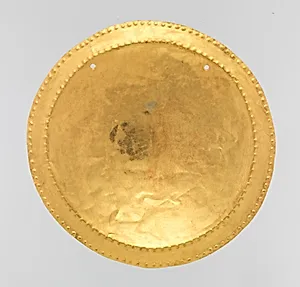
Pectoral Disk
Unknown Artist
8th–12th century
Medium
Gold
Dimensions
H. 5 3/4 × W. 5 3/4 × D. 3/8 in. (14.6 × 14.6 × 1 cm)
Classification
Metal-Ornaments
Culture
Coclé (Macaracas)
Department
Arts of Africa, Oceania, and the Americas
Museum
Metropolitan Museum of Art, New York, NY
Credit
Jan Mitchell and Sons Collection, Gift of Jan Mitchell, 1991
Accession Number
1991.419.13
Rights
Public Domain
Art Historical Context
Behold the exquisite **Pectoral Disk a radiant gold ornament from the Coclé (Macaracas style) of ancient Panama, dating to the 8th–12th century. Measuring a neat 5¾ × 5¾ inches, this circular chest pendant exemplifies the masterful metalwork of pre-Columbian Isthmian societies. Likely worn by elites suspended from a cord, it served as a powerful emblem of status, spirituality, or authority in a world where gold symbolized the sun's divine energy. The Coclé people, flourishing in Panama's fertile lowlands, were renowned for their sophisticated goldsmithing, which bridged Mesoamerican and South American artistic traditions. This pectoral, classified as a metal ornament, reflects their skill in hammering and shaping thin gold sheets into lightweight yet durable jewelry. Such pieces often adorned burials, accompanying chieftains into the afterlife and underscoring the culture's complex social hierarchies and ritual practices. Today, this treasure from the Metropolitan Museum of Art's Arts of Africa, Oceania, and the Americas collection—gifted through the Jan Mitchell Collection in 1991—invites us to marvel at Coclé artisans' enduring legacy. Its subtle depth of just ⅜ inch highlights their precision, turning humble metal into objects of awe that still gleam with ancient prestige.