
Pectoral of Mutnefret
Unknown Artist
ca. 1295–1070 B.C.
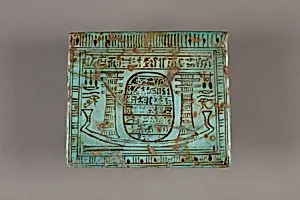
Medium
Faience
Dimensions
L. 13.6 × H. 11.2 × D. 1.5 cm (5 3/8 × 4 7/16 × 9/16 in.)
Classification
Pectoral, Mutnefret
Period
New Kingdom, Ramesside
Department
Egyptian Art
Museum
Metropolitan Museum of Art, New York, NY
Credit
Purchase, Edward S. Harkness Gift, 1926
Accession Number
26.7.906
Rights
Public Domain
Art Historical Context
Behold the *Pectoral of Mutnefret*, a exquisite chest ornament from Egypt's New Kingdom, crafted during the Ramesside period (ca. 1295–1070 B.C.), spanning Dynasties 19–20. This era marked the height of pharaonic power, with monumental temples and grand royal courts under rulers like Ramesses II. Pectorals like this one were prized personal adornments, often worn by nobility or royalty—here named for Mutnefret—serving both as symbols of status and protective talismans invoking divine favor. Fashioned from faience, a vibrant glazed ceramic composite of crushed quartz, Egypt's artisans achieved a brilliant turquoise hue mimicking precious stones like lapis lazuli. At just 13.6 cm long, this delicate piece (L. 13.6 × H. 11.2 × D. 1.5 cm) showcases the medium's versatility for intricate jewelry, affordable yet luminous for elite wear. Faience's glassy sheen and durability made it ideal for amulets and ornaments meant to endure into the afterlife. Acquired through the Edward S. Harkness Gift in 1926, this pectoral now graces the Metropolitan Museum of Art's Egyptian Art collection, offering a window into ancient beliefs in eternity and beauty. Imagine it gleaming against linen robes in a sunlit palace—timeless elegance from the Nile's golden age.