
Pedal Harp
ca. 1780
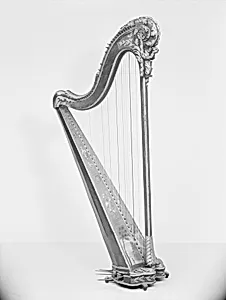
Medium
Wood, various materials
Dimensions
Extreme H. 167 cm (65-3/4 in.); L. of pillar: 137 cm (54 in.); Soundboard: resonating L.: 117.5 cm (46-1/4 in.), greatest W.: 31 cm (12-1/2 in.); Strings (sounding L): longest: 140.5 cm (55-3/8 in.), shortest: 12 cm (4-3/4 in.), c2: 27.5 cm (10-7/8 in.)
Classification
Chordophone-Harp
Culture
French
Department
Musical Instruments
Museum
Metropolitan Museum of Art, New York, NY
Credit
Gift of Susan Dwight Bliss, 1944
Accession Number
44.157.7
Rights
Public Domain
Art Historical Context
This elegant pedal harp, crafted around 1780 by the renowned French maker Jean Henri Naderman, stands as a testament to the refined musical culture of late eighteenth-century France. As a chordophone, it combines functional design with decorative artistry, its wooden frame and soundboard supporting a complex array of strings that range dramatically in length. The instrument’s sophisticated pedal mechanism allowed players to alter pitches mid-performance, marking an important evolution in harp design that expanded its expressive possibilities during the Classical era. Naderman’s work reflects the high craftsmanship of Parisian instrument makers, who supplied courts and salons with instruments that were both tools for performance and symbols of elegance. Its generous proportions—reaching over five feet in height—highlight the balance between acoustic resonance and visual grace typical of the period. Donated to the Metropolitan Museum of Art in 1944 by Susan Dwight Bliss, this harp invites visitors to appreciate how music and art intertwined in pre-Revolutionary France. Today, it offers a tangible link to the sounds that once filled aristocratic drawing rooms, demonstrating the technical ingenuity that shaped modern harp playing.