
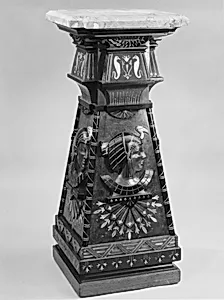
Pedestal
Unknown Artist
1865–70
Medium
Walnut, burl walnut, poplar, marble
Dimensions
39 x 17 1/8 x 17 1/8 in. (99.1 x 43.5 x 43.5 cm)
Classification
Pedestal
Culture
American
Department
The American Wing
Museum
Metropolitan Museum of Art, New York, NY
Credit
Funds from various donors, 1970
Accession Number
1970.34
Rights
Public Domain
Art Historical Context
Step into the refined world of 19th American decorative arts with *Pedestal*, a masterful example of post-Civil War craftsmanship created between 1865 and 1870. Crafted from rich walnut, strikingly figured burl walnut, supportive poplar, and a polished marble top, this-based stand measures 39 inches tall—perfect for elevating sculptures, vases, or cherished objects in a Victorian parlor or grand hall. The unknown artist's skillful use of exotic burl walnut veneers highlights the era's fascination with natural wood grains, adding a luxurious, organic texture that catches the light beautifully. Historically, this pedestal emerges from the Reconstruction period, when American furniture makers drew on European Revival styles like Rococo or Renaissance to showcase national prosperity and technical prowess. The combination of hardwoods for durability and marble for elegance reflects advanced joinery techniques and a growing domestic market for high-end home furnishings. Poplar's use as a secondary wood underscores efficient, layered construction typical of the time. Today, housed in The Metropolitan Museum of Art's American Wing and acquired through generous donor funds in 1970, *Pedestal* invites us to appreciate the unsung artistry of anonymous craftsmen. It stands as a testament to America's evolving aesthetic identity, blending functionality with understated opulence.