
Pedestal (socle)
Unknown Artist
first half 19th century
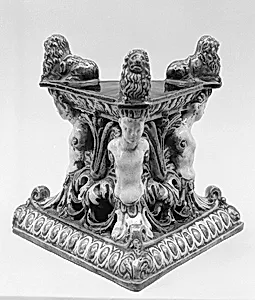
Medium
Lead-glazed earthenware
Dimensions
4-7/8 x 6 in. (12.4 x 15.2 cm)
Classification
Ceramics-Pottery
Culture
French
Department
European Sculpture and Decorative Arts
Museum
Metropolitan Museum of Art, New York, NY
Credit
Samuel D. Lee Fund, 1941
Accession Number
41.49.7
Rights
Public Domain
Tags
Art Historical Context
This delicate pedestal, orsocle*, crafted in-glazed earthenware by unknown French artist in the first half of the 19th century, exemplifies refined ceramics of Europe's Romantic era. Measuring just 4-7/8 x 6 inches, its petite scale suggests it was designed to elevate a small sculpture or decorative object, a common feature in bourgeois interiors and grand salons. The lead glaze imparts a glossy, jewel-like sheen to the earthenware body, enhancing durability while allowing for intricate molded details—here, lively motifs of human figures and majestic lions that evoke strength and classical mythology. In 19th-century France, amid the post-Napoleonic revival of imperial grandeur, such pottery pieces blended functionality with artistry, drawing neoclassical traditions while embracing industrial advances in glazing techniques. Lions, symbols of power and guardianship, paired with human forms, reflect the era's fascination with heroic narratives and exoticism. Acquired through the Samuel D. Lee Fund in 1941 for the Metropolitan Museum of Art's European Sculpture and Decorative Arts collection, this socle offers a glimpse into everyday luxury, highlighting the unsung mastery of anonymous potters who supplied the tastes of a burgeoning middle class.