
Pelerine
Unknown Artist
ca. 1835
Medium
Cotton
Classification
Pelerine
Culture
American
Department
Costume Institute
Museum
Metropolitan Museum of Art, New York, NY
Credit
Brooklyn Museum Costume Collection at The Metropolitan Museum of Art, Gift of the Brooklyn Museum, 2009; Gift of Emily T. Clay and Ellen Thomas, 1961
Accession Number
2009.300.5231
Rights
Public Domain
Art Historical Context
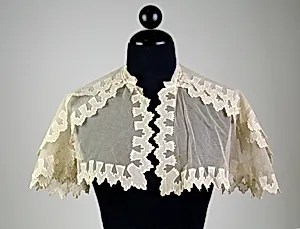
Step into the elegant world of 1830s American fashion with *Pelerine*, a delicate cotton capelet from around 1835. This garment, created by an unknown artist, exemplifies the pelerine—a short, triangular shawl-like accessory draped over the shoulders and fastened at the neck. Worn by women to add modesty, warmth, and a touch of sophistication to day dresses, it was a staple in mid-19th-century wardrobes, reflecting the Romantic era's emphasis on feminine silhouettes with full skirts and fitted bodices. Crafted cotton, a practical and versatile medium that made high fashion accessible beyond elite silks, this piece highlights everyday American textile artistry. Its simple yet refined construction underscores the era's blend of functionality and style, when ready-to-wear elements began influencing home-sewn attire. As part of the Costume Institute at The Metropolitan Museum of Art, it offers a tangible glimpse into the lives of women navigating a rapidly industrializing society. Originally from the Brooklyn Museum Costume Collection—gifted in 1961 by Emily T. Clay and Ellen Thomas, and transferred to the Met in 2009—*Pelerine* preserves a slice of cultural history, inviting us to appreciate how clothing told stories of identity and aspiration.