
Pelisse
Unknown Artist
1830–35
Medium
cotton
Classification
Pelisse
Culture
German
Department
Costume Institute
Museum
Metropolitan Museum of Art, New York, NY
Credit
Gift of Mrs. Bernard F. Gimbel, 1947
Accession Number
C.I.47.4.1
Rights
Public Domain
Art Historical Context
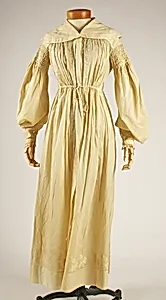
Step into the elegant world of 1830s German fashion with this charming *Pelisse*, a lightweight cotton coat from the Costume Institute at The Metropolitan Museum of Art Dating to 1830–35, this garment exemplifies the pelisse style—a fitted, knee-length outerwear piece popular among women during the early Romantic era. Worn over dresses for both day and evening, it reflected the era's shift toward more structured silhouettes influenced by the burgeoning Victorian aesthetic. Crafted entirely from cotton, the pelisse highlights the material's rising prominence in 19th-century European wardrobes. Cotton's breathability and affordability made it ideal for everyday elegance, especially in Germany's temperate climate, allowing for delicate construction without the heaviness of wool or fur. Though the artist remains unknown, such pieces were often produced by skilled seamstresses or ateliers, embodying the artisanal precision of Biedermeier-era craftsmanship—simple yet refined, prioritizing functionality and subtle ornamentation. A generous gift from Mrs. Bernard F. Gimbel in 1947, this pelisse offers a tangible glimpse into daily life and social customs of the time, underscoring fashion's role as cultural storytelling. Visitors, imagine wrapping yourself in its soft folds—history feels remarkably close!