
Pen
Unknown Artist
30 B.C.–A.D. 364
Medium
Reed
Dimensions
L. 9.5 cm (3 3/4 in.)
Classification
Pen
Period
Roman Period
Department
Egyptian Art
Museum
Metropolitan Museum of Art, New York, NY
Credit
Gift of Egypt Exploration Fund, 1905
Accession Number
05.4.162
Rights
Public Domain
Art Historical Context
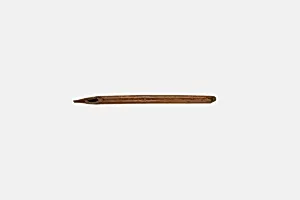
This slender reed pen, dating from 30 B.C. to A.D. 364, offers a glimpse into the everyday world of Roman Egypt. Crafted from a single piece of reed—likely from the Nile Delta—the 9.5 cm tool was sharpened at one end to form a nib for writing on papyrus. Simple yet functional, it exemplifies the utilitarian artistry of ancient scribes, whose precision ensured the survival of texts, contracts, and literature across millennia. During Egypt's Roman Period, following Cleopatra's defeat, the region blended pharaonic traditions with imperial administration. Reed pens like this one were essential for bureaucrats, scholars, and priests, supporting a vibrant scribal culture that produced everything from tax records to magical spells. Donated to the Metropolitan Museum of Art in 1905 by the Egypt Exploration Fund, it was likely unearthed from a site revealing daily life under Roman rule. Though modest in scale, this pen highlights the cultural continuity of Egyptian writing practices, underscoring literacy's role in governance and religion. Handling such an artifact connects us to the hands that shaped history.