
Pendant
Unknown Artist
ca. 1600
Medium
Gold, enamel, rubies, emeralds, diamonds, pearls
Dimensions
Overall: 4 7/16 × 2 1/8 × 5/8 in. (11.3 × 5.4 × 1.6 cm)
Classification
Metalwork-Gold and Platinum|Jewelry
Culture
Northern European
Department
European Sculpture and Decorative Arts
Museum
Metropolitan Museum of Art, New York, NY
Credit
The Friedsam Collection, Bequest of Michael Friedsam, 1931
Accession Number
32.100.299
Rights
Public Domain
Tags
Art Historical Context
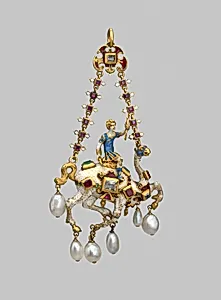
This stunning pendant, crafted around 1600 by an unknown European artist, exemplifies the lavish metalwork of the late Renaissance. Measuring just over 4 inches tall, it is a masterpiece of goldsmithing adorned with vibrant enamel, sparkling rubies, emeral, diamonds, and lustrous pearls. The intricate design likely depicts women and camels, evoking themes that captivated European elites expanding global trade routes—perhaps symbolizing biblical narratives like the journey of the Magi or the allure of distant lands. amel techniques, such as cloisonné or champlevé, allowed artisans to paint vivid scenes in glass-like colors fired onto gold, while precisely cut gems added brilliance and symbolism: rubies for passion, emeralds for fertility, and pearls for purity. Such jewelry was not mere adornment but a status symbol for nobility, worn as pectoral pendants during grand occasions. Now part of The Friedsam Collection at The Metropolitan Museum of Art, this piece highlights the technical virtuosity and cultural exchanges of Northern Europe's decorative arts, inviting us to marvel at the era's blend of piety, luxury, and wanderlust.