
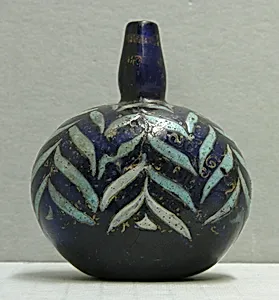
Perfume Sprinkler (Qumqum)
Unknown Artist
early 13th century
Medium
Glass, blue; blown, enameled, and gilded
Dimensions
H. 2 1/2 in. (6.3 cm) Diam. 1 3/8 in. (3.5 cm)
Classification
Glass
Department
Islamic Art
Museum
Metropolitan Museum of Art, New York, NY
Credit
Bequest of Walter C. Baker, 1971
Accession Number
1972.118.42
Rights
Public Domain
Art Historical Context
This delicate blue glass perfume sprinkler, known as a *qumqum*, hails from the early 13th century in the Islamic world, a time when finely crafted glassware embodied elegance and refinement. Standing just 2½ inches tall, its petite, pear-shaped form with a slender neck and flared foot made it perfectly portable—ideal for carrying scented waters during travel, social gatherings, or religious rituals. Now housed in the Metropolitan Museum of Art's Art Department, it entered the collection through the bequest of Walter C. Baker in 1971. Crafted using masterful techniques, the vessel was blown into shape, then adorned with enamel paints and gilding, fired to create vibrant, enduring decorations. This enameling process, perfected in Syrian and Egyptian workshops during the medieval period, allowed artisans to apply intricate designs in gold and colors that mimicked costly metalwork, elevating glass from everyday material to luxury good. The rich blue hue, achieved through metallic oxides, evokes the lapis lazuli prized in Islamic art. In Islamic culture, perfume sprinklers like this were more than functional; they symbolized hospitality, purity, and sensory delight, often used to sprinkle rosewater or musk during ablutions or to welcome guests. This exquisite example offers a glimpse into the sophisticated artistry of anonymous craftsmen whose innovations influenced glassmaking across continents.