
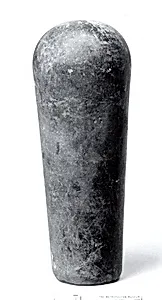
Pestle
Unknown Artist
ca. 3rd–7th century CE
Medium
Limestone, black
Dimensions
6.26 in. (15.9 cm)
Classification
Stone-Implements
Culture & Period
Sasanian · Sasanian
Department
Ancient Near Eastern Art
Museum
Metropolitan Museum of Art, New York, NY
Credit
Rogers Fund, 1936
Accession Number
36.30.1
Rights
Public Domain
Art Historical Context
Step into the world of the Sasanian Empire with this elegant pestle, crafted from striking black limestone around the 3rd–7th century. Hailing from ancient Iran, this handheld tool—measuring just 6.26 inches (15.9 cm)—was a staple in daily life, used alongside a mortar to grind grains, spices, pigments, or medicines. Its smooth, ergonomic form reveals the skilled stoneworking of Sasanian artisans who transformed utilitarian objects into refined pieces through careful carving and polishing. The Sasanians ruled a vast realm from Mesopotamia to Central Asia, blending Persian traditions with influences from Rome, India, and beyond. Stone implements like this pestle highlight their mastery of local materials; the rare black limestone adds a touch of visual drama, perhaps chosen for its durability or symbolic depth in Zoroastrian-influenced culture. Far from mere kitchenware, such tools underscore the empire's sophisticated society, where everyday crafts supported grand achievements in art, architecture, and science. Acquired through the Rogers Fund in 1936 and now housed in the Metropolitan Museum of Art's Ancient Near Eastern Art department, this pestle invites us to ponder the hands that once wielded it—bridging millennia of human ingenuity.