
Petticoat
Unknown Artist
1883
Medium
cotton, linen
Classification
Petticoat
Culture
American
Department
Costume Institute
Museum
Metropolitan Museum of Art, New York, NY
Credit
Brooklyn Museum Costume Collection at The Metropolitan Museum of Art, Gift of the Brooklyn Museum, 2009; Gift of Lillian E. Glenn Peirce and Mabel Glenn Cooper, 1929
Accession Number
2009.300.2989a, b
Rights
Public Domain
Art Historical Context
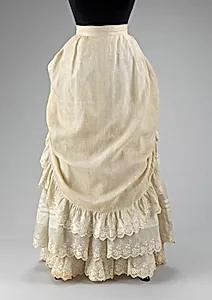
Step into the elegant underlayers of 1880s American fashion with this petticoat, a quintessential garment from the Victorian era. Dating to 1883, it the structured undergarments that shaped the era's silhouette, providing modesty, volume, and support beneath voluminous skirts and emerging bustles. Worn by women of the growing middle class, petticoats like this were essential for achieving the fashionable hourglass figure, reflecting the societal emphasis on propriety and poise in post-Civil War America. Crafted from cotton and linenbreathable, durable fabrics ideal for everyday wear—this piece highlights practical textile choices of the time. Cotton offered softness and absorbency, while linen added strength, making it suitable for layered ensembles in an age before synthetic materials. Though the artist is unknown, such garments were often handmade by skilled seamstresses, underscoring the labor-intensive nature of 19th-century dressmaking. Now housed in The Metropolitan Museum of Art's Costume Institute, this petticoat hails from the Brooklyn Museum Costume Collection, gifted in 2009 (originally donated in 1929). It offers a tangible glimpse into American domestic life, preserving the intimate stories of wearers long past and celebrating the artistry of functional fashion.